


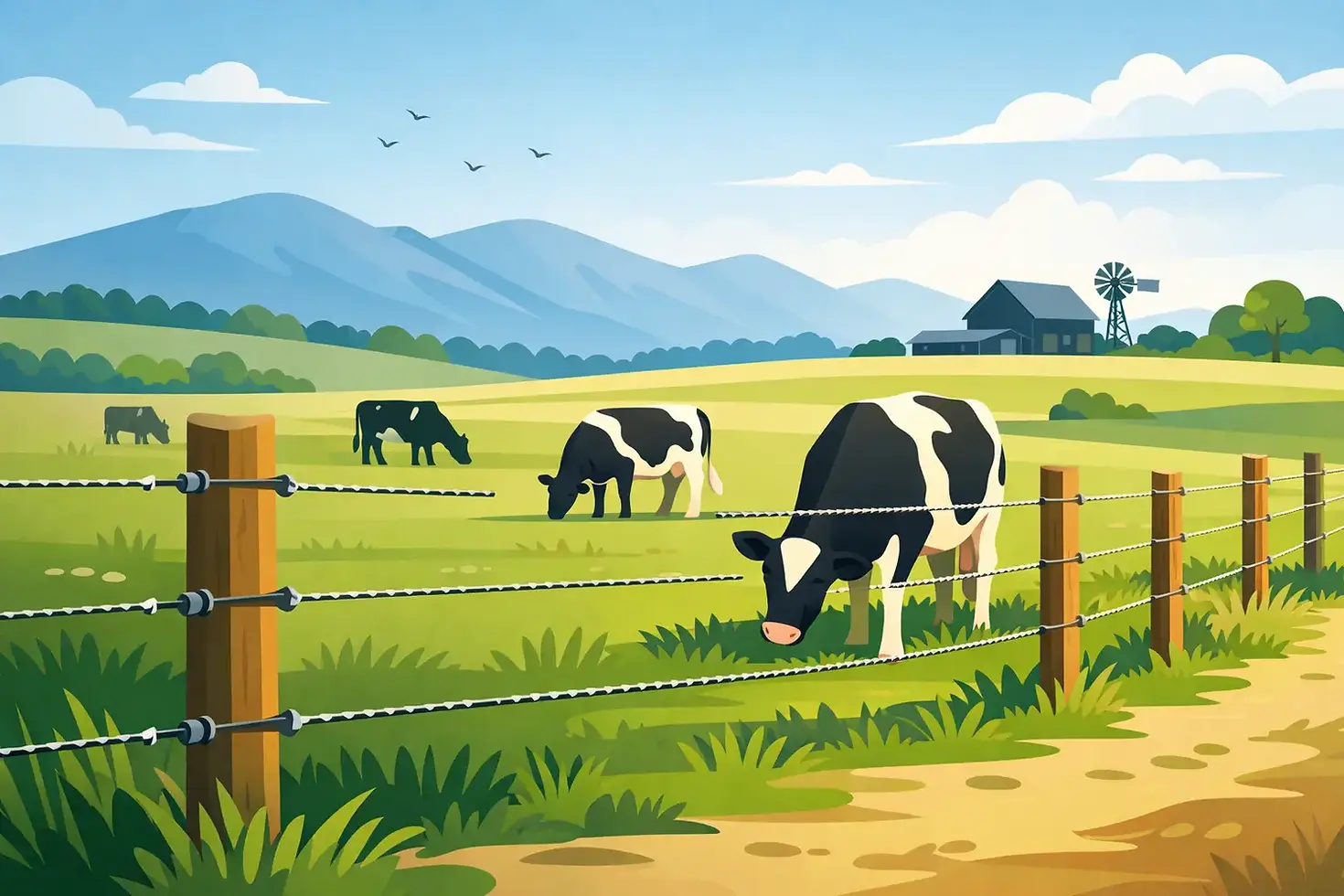
Best Farm Fence for Cattle in Victoria

A fence that looks fine from the ute can still be the weak point in your whole paddock system. Cattle lean, rub, test corners and find the one section that was built a bit light. That’s why choosing the best farm fence for cattle is less about picking a product off a shelf and more about matching the fence to your land, stock pressure and day-to-day use.
Around the Yarra Valley and wider Victorian districts, there is no single fence that suits every cattle property. Flat grazing country, heavier clay, timbered blocks, laneway systems and boundary lines all ask different things of a fence. The right job starts with being clear on what the fence needs to handle, how long you want it to last and how much maintenance you are prepared to do.
What is the best farm fence for cattle?
For most cattle properties, the best farm fence for cattle is a well-braced post and wire fence with quality end assemblies, solid strainers and either plain or barbed top wires depending on the application. In many cases, a combination of hingejoint or stock mesh with plain wires above gives better control, especially for calves or mixed stock.
That said, there is no point pretending every paddock is the same. A frontage fence holding quiet breeders is different from a high-pressure laneway, a boundary beside a road or a subdivision fence on a property being prepared for sale. The best option depends on stock class, terrain, exposure to weather and whether you need a fence mainly for containment, boundary definition or both.
Why cattle fences fail sooner than they should
Most cattle fencing problems do not start with the wire. They start with poor bracing, weak corners, shallow posts or the wrong spacing for the conditions. Once a beast leans into a loose section, the strain shifts and the whole line starts losing shape.
In wet areas or softer ground, posts can move over time if they were never properly set to begin with. In timbered country, falling branches and trees are an obvious risk. On high-use sections near yards, troughs and gateways, cattle pressure is constant, so lighter fencing often ends up costing more in repairs.
This is why the cheapest fence per metre is not always the cheapest fence over ten years. A stronger build upfront usually saves money, time and headaches later.
The main cattle fencing options
Plain wire fencing
A plain wire fence is a common and practical choice for cattle when built properly. It is clean, effective and suits many grazing properties. With enough lines, good post spacing and strong strainers, it gives reliable stock control for adult cattle.
Its biggest advantage is simplicity. Repairs are usually straightforward, materials are widely available and it works well across long runs. The trade-off is that plain wire on its own may not be the best choice for calves, more active stock or areas where pressure on the fence is high.
Barbed wire fencing
Barbed wire still has its place on some cattle properties, especially for boundary fencing or where extra deterrence is needed. It can help stop stock from pushing through or leaning over a fence line.
The downside is obvious. Barbed wire can cause injury, and many landowners now prefer to limit where they use it. It often makes sense as part of a system rather than the whole answer - for example, on the top line of a boundary fence rather than throughout every internal paddock.
Stock mesh or hingejoint fencing
If you are running calves, mixed stock or need tighter control, stock mesh with supporting plain wires above is often one of the most dependable options. It gives a physical barrier rather than relying on wire spacing alone.
This style is especially useful along roadsides, house paddocks and areas where you do not want cattle challenging the fence in the first place. It costs more than a basic wire setup, but it can reduce escapes and patch-up repairs. For many owners, that extra upfront spend is worth it.
Electric fencing
Electric fencing can work very well for cattle, but only when it is designed and maintained properly. As a standalone fence, it suits some situations better than others. As an offset or internal management fence, it can be excellent.
It is useful for rotational grazing, protecting pressure points and training cattle away from boundaries. The catch is maintenance. Vegetation, poor earthing, damaged insulators and weak energisers quickly reduce effectiveness. If you want a low-attention boundary fence, electric on its own is usually not the first choice.
Best farm fence for cattle by use case
Boundary fencing
For external boundaries, strength and longevity matter most. This is where solid end assemblies, quality posts and a fence design that can handle pressure over time are worth paying for. Plain wire with a barbed top line, or stock mesh with top wires, are both common depending on the property and neighbouring land use.
If the boundary runs beside a road, tighter containment is usually the safer choice. A beast through a weak roadside fence becomes a much bigger problem than a repair bill.
Internal paddocks
Internal fences can often be simpler, but they still need to suit the stock. Quiet adult cattle on well-managed pasture may do well behind a straightforward plain wire setup. If you are moving younger stock or splitting mobs often, a more controlled system may save trouble.
This is also where electric can be a useful addition. It helps reduce leaning and rubbing on the main fence line.
Laneways, yards and high-traffic areas
These sections take more pressure than open paddocks. Cattle bunch, turn and push harder near gates, corners and feed or water points. A fence that is acceptable in a back paddock may not last in a laneway.
For these areas, heavier construction usually makes sense. Closer post spacing, stronger bracing and reliable gate hardware all matter. It is not the place to cut corners.
What matters more than the fence type
A lot of discussion around cattle fencing focuses on wire choice, but the build quality is just as important. Good strainers and corners hold tension. Properly set posts keep lines straight. The right post spacing supports the wire and suits the ground conditions.
Terrain also changes the answer. Rocky ground, steep sections and wet pockets all affect how a fence should be built. The best design on paper can still underperform if it ignores what the site is doing.
Material quality matters too. Better posts, dependable steel components and suitable gates generally last longer and perform better under pressure. On a working farm, that reliability counts.
Balancing cost against long-term value
Every landowner has a budget, and that is fair enough. But it helps to compare options on whole-of-life cost rather than just the install figure. A cheaper fence that needs regular repairs, restretching or early replacement can end up costing more than a stronger one built properly from the start.
If the property is being prepared for sale, presentation and function both matter. Neat, well-built fencing improves usability and gives buyers confidence. If you have just bought a rural block, getting the boundary and key holding paddocks right first often makes the rest of the property easier to manage.
This is where honest advice matters. Sometimes a premium fence is justified. Other times, a simpler option is the sensible choice and does the job well.
Getting the right fence for your property
The best result usually comes from a site-based decision, not a generic answer. What stock are you running? Are there calves involved? Is the ground wet, steep or heavily timbered? Do you need a hard-wearing boundary, or are you improving internal paddock layout? How often will cattle pressure that fence line?
These are practical questions, and they shape the right design. An experienced rural fencing contractor should be able to walk the site, explain the options clearly and quote based on what the fence actually needs to do, not just what is easiest to price.
At Yarra Valley Rural Fencing, that practical approach is what local owners tend to value most - clear advice, realistic quoting and fencing that suits the property rather than a one-size-fits-all recommendation.
If you are weighing up the best farm fence for cattle, start with the parts of the property that matter most when something goes wrong: boundaries, roadsides, laneways and holding areas. Build those properly, and the rest of your fencing plan gets a lot easier.


Comments