


How to Secure Stock Fencing That Holds Up
- Roy C

- 1 day ago
- 6 min read
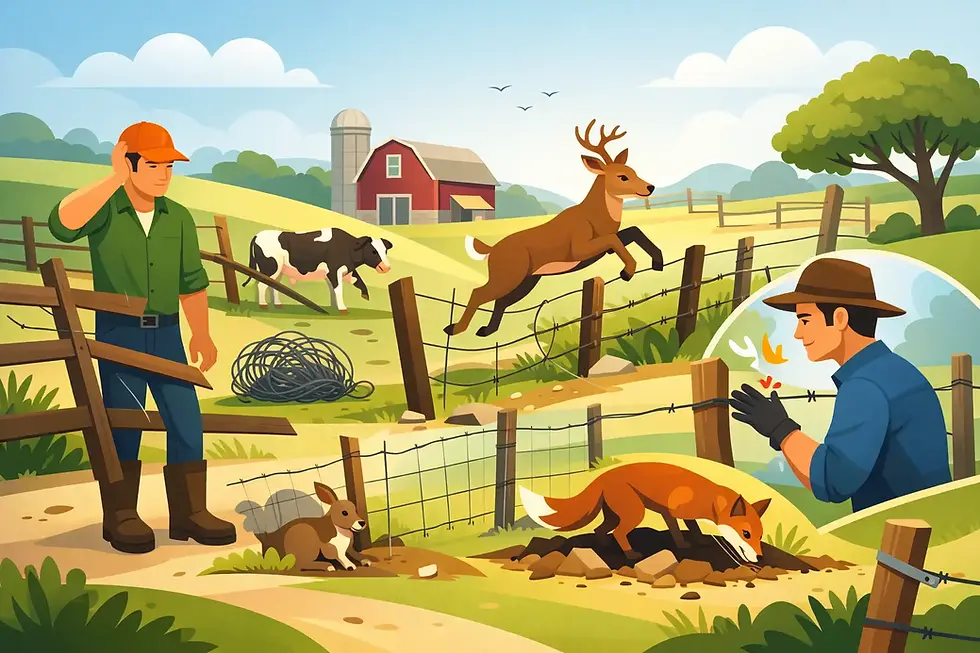
A stock fence can look straight on the day it is installed and still fail when the first mob leans on it, a branch comes down in a storm, or wet ground starts moving around the posts. Knowing how to secure stock fencing properly is less about adding more wire and more about building strength into the points that carry the load.
For rural properties in the Yarra Valley, the right approach depends on your stock, soil, slope, gate locations and the condition of the existing fence line. A fence that suits a quiet paddock of sheep may not hold cattle that regularly test the boundary. Taking the time to get the foundations, strainers and tension right saves repeated repair work later.
Start with a fence line that can be maintained
Before putting in a post, walk the full line and look at it as a working part of the property. Check for fallen timber, old wire hidden in grass, washouts, rocky sections and low spots where water sits. These are the places that can make a sound fence loose prematurely.
Clear enough space to safely install and repair the fence in future. You do not need to strip every bit of vegetation from a boundary, but trees rubbing on wires and heavy blackberry growth will cause trouble. If a line runs through timbered country, consider whether a slight realignment can reduce the chance of a falling limb taking out several bays at once.
It also pays to consider access. A fence that cannot be reached by a ute, quad bike or on foot when repairs are needed can become an expensive nuisance. Plan gates and access points around the way you actually move livestock, equipment and feed, not just where the old fence happened to be.
How to secure stock fencing starts at the ends
End assemblies, corners and direction changes take far more pressure than ordinary line posts. If they shift, the tension comes out of the whole run. This is why a fence is only as secure as its strainer posts and bracing.
Use suitably sized, durable strainer posts set deep enough for the ground conditions. In firmer soils, a well-driven post may be appropriate. In softer, wetter or disturbed ground, posts often need extra depth and careful bracing to prevent them lifting or leaning under load. There is no one depth that suits every property, which is where an on-site assessment is worthwhile.
A proper end assembly generally needs a strainer post, a stay or brace, and a tensioning arrangement that transfers the pull of the wires into the ground. The brace should work against the direction of strain, not simply sit there for appearance. At corners, allow for the pull from both directions and build the assembly accordingly.
Do not rely on a light star picket as the main end post for a long stock fence. Star pickets are useful line posts in the right setup, especially for lighter fencing or temporary divisions, but they are not a substitute for a properly constructed strainer assembly.
Get post spacing right for the terrain
Post spacing affects both security and cost. Wider spacing can reduce material and installation costs, but it can leave mesh sagging or allow animals to push between posts. Closer spacing provides better support, particularly on undulating ground, around gateways and where cattle pressure is high.
On slopes, follow the contour carefully and add posts where the ground changes direction. Long straight spans over hollows and rises make it difficult to keep wire tension even. A few additional posts in the right locations are usually cheaper than revisiting a loose fence after stock have started leaning through it.
Choose fencing to suit the animals, not just the boundary
The best fence type depends on what it needs to contain or exclude. Cattle need a strong, visible barrier that can cope with leaning and rubbing. Sheep require mesh spacing that prevents lambs from getting through or caught. Horses need fencing that is highly visible and free of sharp edges or loose wire. If keeping wildlife out is part of the job, the height, mesh and ground clearance all need closer consideration.
Hinge-joint or ring-lock mesh is a common choice for general rural fencing because it provides a physical barrier across the full height of the fence. It is often paired with plain or barbed wires, depending on stock and property requirements. Barbed wire can discourage pressure from cattle, but it is generally unsuitable where horses are involved because of the injury risk.
Electric fencing can be an effective addition, particularly as an offset wire to stop cattle pushing on mesh. It is not a replacement for good construction. An electric wire needs reliable energising, sound earthing and regular checking. If the underlying posts and strainers are weak, the fence can still fail when the power is off or vegetation shorts the line.
Tension wire evenly without over-tightening it
Tension is what makes a stock fence perform, but too much tension can be as troublesome as too little. Over-tightened wire puts excessive pressure on posts and strainers, particularly during cold weather when wire contracts. It can also increase the chance of wire snapping or assemblies pulling out of alignment.
Tension each wire or mesh section progressively and check that the fence remains straight as you work. Use appropriate gripples, joiners or knots rated for the wire being used, rather than improvised joins that can slip under load. Keep joins neat and away from high-pressure points where possible.
Mesh should be stretched firmly enough that it does not sag or billow when stock lean against it, while still allowing for normal movement in changing temperatures. The correct tension varies with the product, fence length and ground conditions. If in doubt, follow the manufacturer’s guidance and avoid trying to pull every wire as tight as possible.
Secure the bottom of the fence where animals dig or push
The bottom wire or mesh is often where problems begin. Sheep, dogs, foxes and wildlife can exploit small gaps beneath a fence, while cattle may push through a low section to reach greener feed on the other side.
Follow the natural ground line rather than leaving large openings across dips. In uneven areas, use closer line-post spacing, add ground-level wires, or peg mesh down where appropriate. If erosion is likely, avoid burying materials in a way that will be exposed after the next heavy rain. The aim is to manage the low point without creating a section that will hold water and rot prematurely.
Build gateways as part of the fence, not an afterthought
Many stock escapes happen at gates rather than through the fence itself. A gate that sags, cannot latch properly or leaves a gap underneath quickly becomes the weak point in an otherwise solid boundary.
Set gate posts to handle the weight and regular use of the gate. Larger farm gates need substantial posts and hardware, especially where machinery access means the opening is wide. Hang the gate level, allow sensible clearance from the ground, and use a latch that can be secured reliably. If stock are persistent or a gate is used frequently, a second chain or drop bolt can provide useful backup.
Think about how the gate swings when the ground is wet, and whether it can be opened safely from a vehicle or on foot. Where stock tend to crowd gateways, consider a small holding area or better lane design instead of expecting the gate alone to manage the pressure.
Check and repair fences before small faults become failures
A secure stock fence needs routine attention, especially after high winds, heavy rain, fallen branches or a busy period of moving stock. Walk key boundaries regularly and look for leaning strainers, loose ties, damaged mesh, broken wires and animal tracks at the base of the fence.
Deal with a loose wire while it is still a short repair. Once tension has been lost across several bays, the load shifts onto neighbouring posts and the repair becomes bigger. Replace damaged posts rather than repeatedly propping them up, and remove trees or limbs that are likely to fall again.
For older fences, assess whether patching is still worthwhile. A few local repairs can extend the life of a sound fence, but widespread rust, decayed timber or failing end assemblies may mean a replacement is the more practical long-term option.
Yarra Valley Rural Fencing can inspect a proposed fence line or an existing damaged fence and provide a straightforward quote based on the work the property actually needs. A site visit is the best time to discuss stock type, access, materials and any problem areas before work begins.
A well-secured fence should make daily farm work easier, not give you another thing to worry about. Build the pressure points properly, check the line after rough weather, and make repairs while they are still manageable.

Comments