


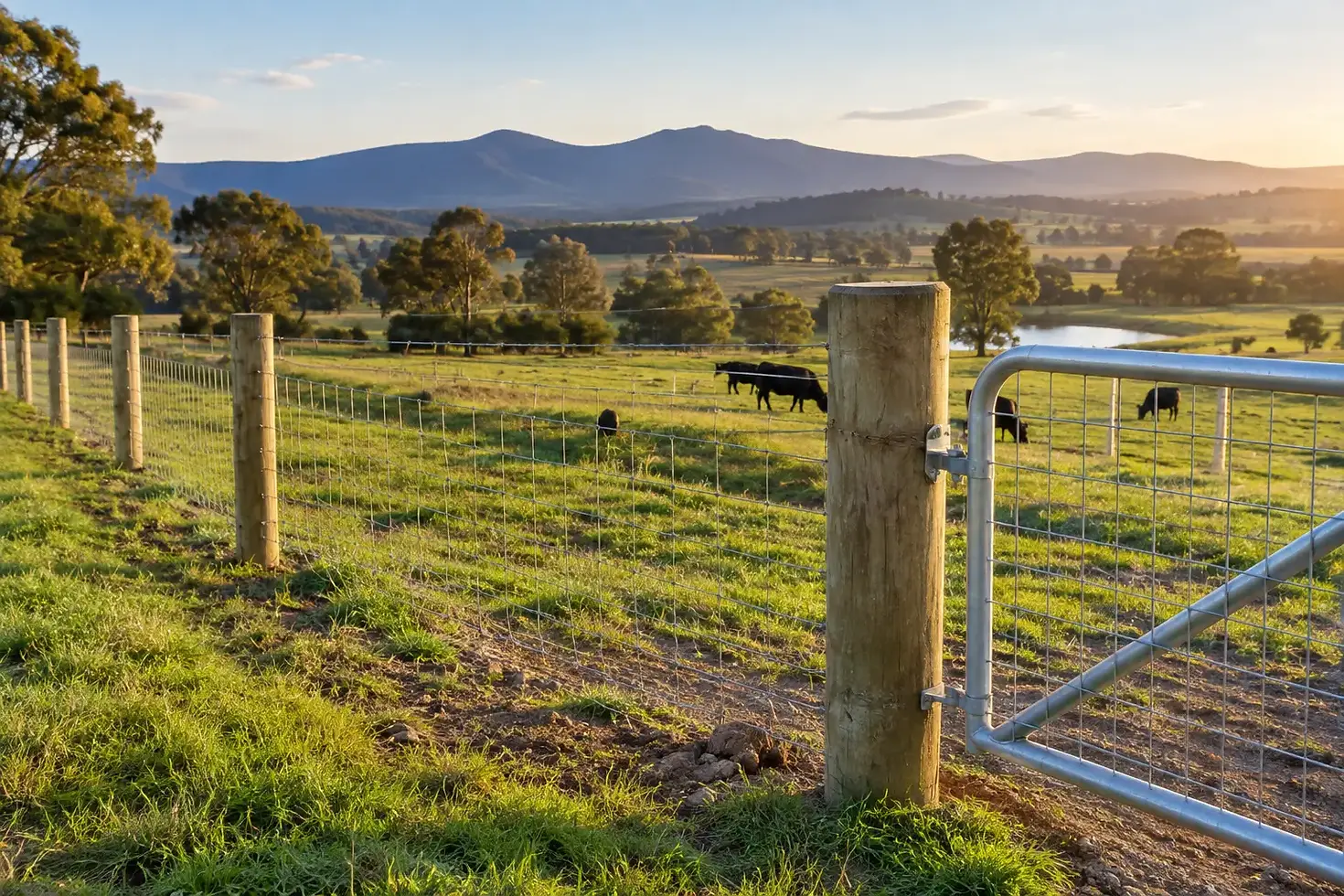
Yarra Valley Rural Fencing That Holds Up

A fence line can look straightforward from the driveway, then turn into a very different job once it crosses a gully, follows a wet boundary or runs through rocky ground. Good Yarra Valley rural fencing starts with the realities of the block: what needs containing, where vehicles need to pass, how water moves across the property and what the fence will face through winter.
For farms, horse properties and acreage blocks, fencing is not just a boundary marker. It affects stock safety, daily access, grazing management and how easily the property can be maintained. Getting the layout and materials right from the start can save plenty of rework later.
Plan Yarra Valley rural fencing around the job
The best fence for one property may be the wrong choice for the next. A quiet lifestyle block with a few sheep has different demands from cattle country, a horse paddock or a boundary that needs to keep wildlife out. Before choosing a fence style, it helps to be clear about the practical job it needs to do.
Consider the animals being contained or excluded, whether the fence needs to handle pressure from stock, and how often people, utes, machinery or horse floats will use the area. Fence height, wire spacing, post placement and gate positions all follow from those answers.
A well-planned layout also makes day-to-day work easier. Gates placed where stock naturally moves can reduce handling time. Access points that line up with laneways and paddocks avoid awkward turns and unnecessary wear on fence corners. If a paddock may be split later, allowing for future gates or internal runs now is usually simpler than pulling apart a finished boundary fence later.
Match the fence to the stock
Post-and-wire fencing remains a practical option for many rural blocks, but the details matter. The appropriate wire configuration depends on whether the fence is for cattle, sheep, horses or mixed livestock. It also depends on how much pressure the fence is likely to take and whether young animals are involved.
Horse fencing deserves particular care. Horses can lean, run into or become caught in poorly suited fencing, so visibility, spacing and safe construction are central considerations. An electric component can help discourage pressure on the fence, but it needs to be designed and maintained properly rather than treated as an afterthought.
Exclusion fencing is another specialised job. Its effectiveness comes down to the target animal, the mesh or wire arrangement, the treatment at ground level and the way the fence meets gates, gullies and changes in terrain. A small gap in the wrong place can defeat the purpose of a long fence line.
Give gates the attention they deserve
A gate is often the hardest-working part of a rural fence. It needs the right opening width, strong hanging points and enough clearance to swing without dragging through mud, grass or uneven ground. It should also suit the vehicle or equipment that will actually use it.
A narrow gate might be fine for a ute but frustrating when moving a tractor, slasher, stock crate or horse float. On the other hand, an oversized opening can be unnecessary where access is limited. The best position is not always the closest point to the road. Drainage, slope, turning room and livestock flow should be considered before posts go in.
Terrain changes the way a fence should be built
Across the Yarra Valley and nearby rural districts, a fence may cross flat pasture, clay soil, steep ground, creek approaches and heavily treed sections on the same property. Treating every metre the same is a common cause of early fence problems.
On sloping ground, wire tension and post spacing need to work with the contour rather than fight it. Low spots need attention because water can scour soil from around posts, carry debris against the fence or create a route underneath it. In rocky areas, installation methods may need to change to achieve sound post depth and a straight, serviceable result.
Corners, ends and strainers carry much of the load in a post-and-wire fence. If these assemblies are underbuilt, the rest of the line can lose tension over time. This is where taking shortcuts rarely pays off. A fence that looks tidy when first installed still needs the strength to cope with stock pressure, wind, wet ground and seasonal movement.
Access matters too. Remote paddocks and steep tracks can affect how materials and equipment reach the fence line. A site inspection is useful because it identifies these issues before work is priced and scheduled, rather than discovering them midway through the job.
Know when to repair and when to replace
Not every damaged fence needs a full replacement. A localised repair can make good sense where the main line is straight, the posts remain sound and the issue is limited to a damaged section, loose wires or a gate that no longer works properly.
Replacement becomes the better option when problems are repeated across the run. Rotten or unstable posts, sagging wires, weak strainers and poor original layout can turn small repairs into a regular expense. If the fence no longer suits the livestock or property use, patching it may only postpone a more useful upgrade.
A straightforward assessment should explain what can reasonably be repaired, what needs replacing and why. That allows property owners to decide with a clear view of the immediate cost and likely longer-term outcome.
Allow for maintenance from the beginning
Even a properly installed rural fence needs checking. Storm damage, fallen branches, stock impact and shifting ground can all affect a fence line. Regular walks along boundaries help catch loose wire, damaged posts, blocked gateways and washouts before they become a bigger issue.
Keep vegetation from growing through wires where practical, particularly around electric fencing. Check that gates latch cleanly and do not put strain on their hinges. After prolonged rain, inspect low points and creek crossings for erosion or debris. These small checks protect the work already done and help keep animals where they should be.
Selected star pickets and rural farm gates for sale
For customers handling their own small project, repair or property improvement, selected fencing products are available directly while stocks last. Current stock includes 1650 mm and 1800 mm star pickets, along with 12 ft / 3.6 m and 14 ft / 4.2 m rural farm gates.
These products can suit farmers, acreage owners, landscapers and contractors who need those particular items. They are available as selected stock, not as a full-range fencing supplies service. Collection or suitable delivery can be discussed depending on the order and location.
Start with a clear site conversation
Before committing to a new fence, it is worth walking the proposed line with someone who understands rural access, stock requirements and the challenges of the ground. Bring up any future plans for additional paddocks, livestock changes, machinery access or new sheds while the fence is being planned.
Yarra Valley Rural Fencing provides supply-and-install solutions for rural, farm and acreage fencing, including new fences, repairs, replacement, gates, horse fencing, electric fencing and exclusion fencing. A practical site visit and no-obligation quote give you the chance to discuss the job properly before work begins.
The right fence should make the property easier to run, not create another recurring problem. A little care in planning the line, the gate locations and the construction approach gives you a fence that is ready for the work ahead.


Comments